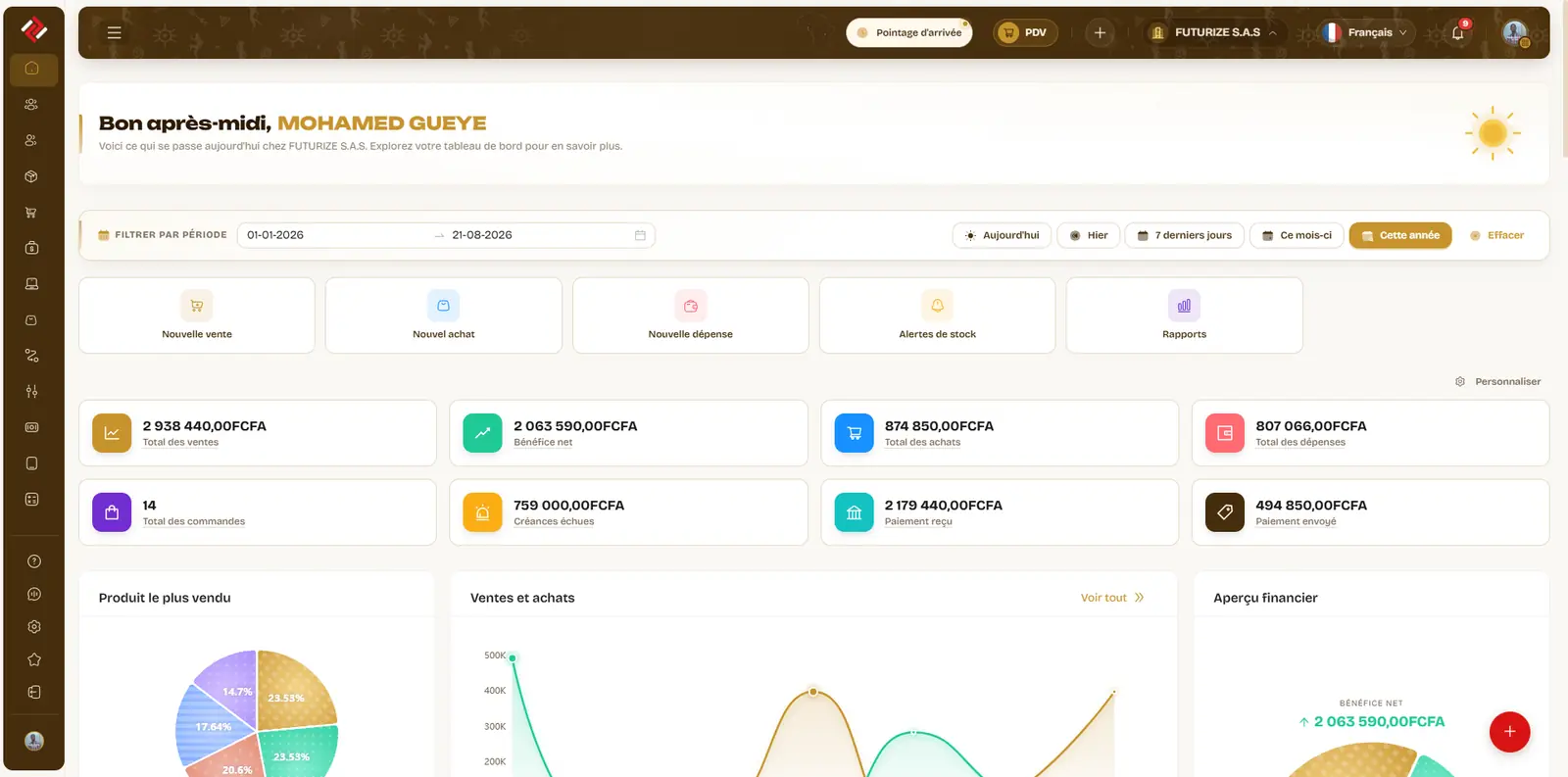
Every deal at its stage, with its amount and its due date. The forecast reads at a glance.
A due date, an owner, a notification. "I’ll call him tomorrow" becomes verifiable.
The quote, the invoice and the customer’s documents sit on the same record as the deal.
What you can do with it
The client company and the people you know there, with the history of exchanges.
A prospect with its source and status, promoted to an opportunity when it gets serious.
Your stages, not an American product’s. Each company defines its own.
Assigned to someone, dated, with multi-channel notification as they approach.
Funnel, weighted forecast, velocity and the team’s recent activity.
How it works
-
01
Describe your stages
From lead to customer, as your cycle actually lives them.
-
02
Put the deals in
Amount, due date, owner. The quote attaches when it goes out.
-
03
Follow up on time
Tasks land, the deal moves a stage, the forecast updates.
What the module includes
- Customers
- Suppliers
- Wallets
A sales cycle that runs through WhatsApp
Here, most of the commercial relationship happens in messaging and on the phone, rarely by formal email. Follow-ups therefore leave on the channel the customer answers, and the exchange history attaches to the record rather than staying in one person’s phone. That is what makes it possible to pick up a file when whoever was handling it has moved on.
Common questions
How is this different from my customer list?
The customer list says who has already bought. The CRM tracks what has not been sold yet: leads, live deals, the follow-ups owed and the forecast that follows from them.
Does the quote go out from the CRM?
Yes. The opportunity carries the quote, and an accepted quote becomes a sale then an invoice without leaving the file.
Does every salesperson see everything?
That depends on the role you give them. Permissions are set screen by screen, the sales dashboard included.