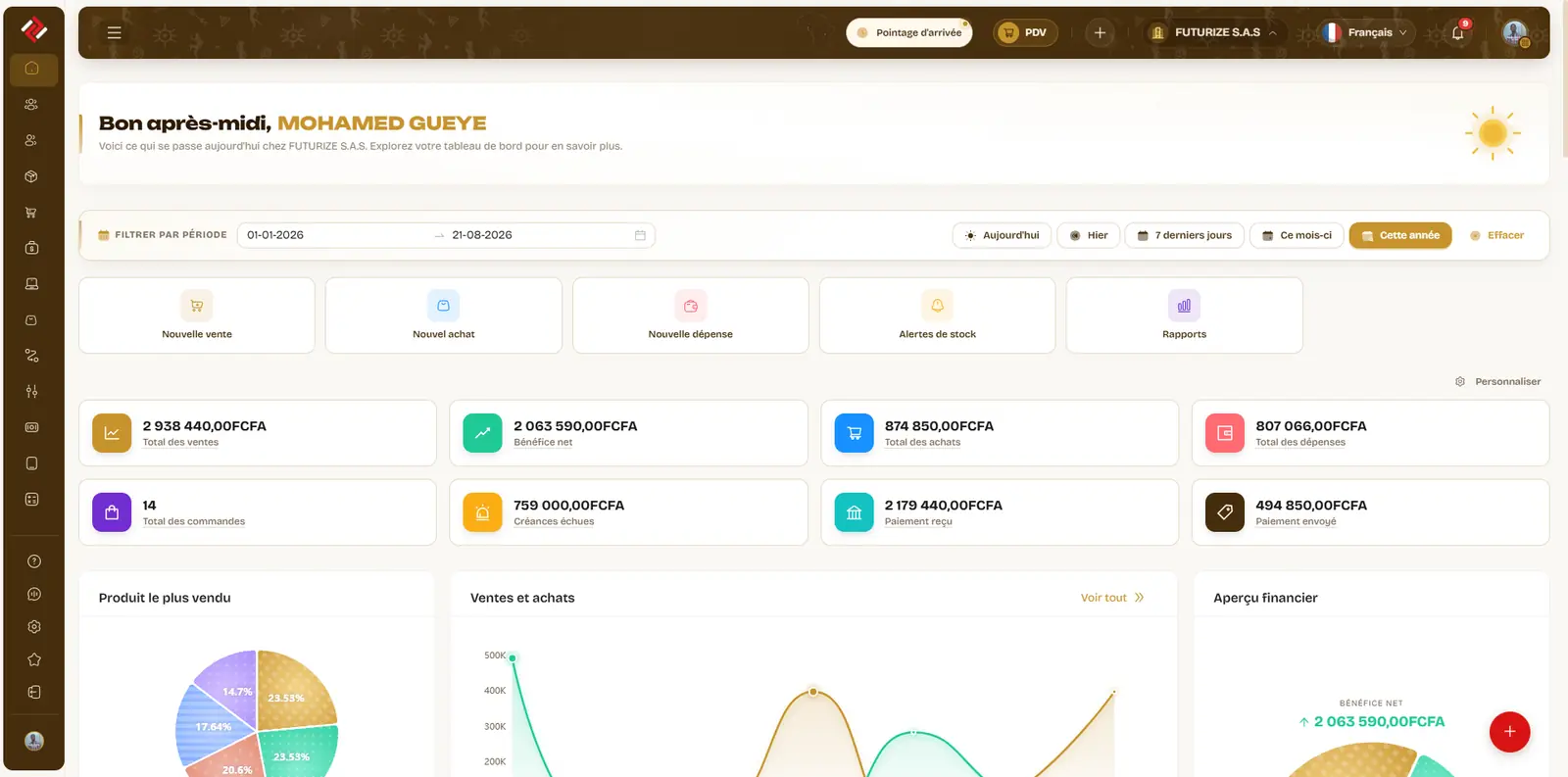
Contract, ID documents, amendments and history in one place, with the access rights to match.
A request, an approval, a balance that updates. No more approximate counting.
Base salary, advances already paid, absences: net pay is derived rather than rediscovered.
What you can do with it
Identity, role, contract, pay and attached documents, with restricted access.
Daily attendance, lateness and absence, viewable by period.
Leave types, requests, approvals and remaining balance per employee.
The month’s payslip, with advances, bonuses and deductions, to print or send.
The local calendar, moveable feasts included, taken into account in leave.
How it works
-
01
Create the files
One record per employee, with their contract and pay.
-
02
Track the month
Attendance, approved leave and advances paid as they happen.
-
03
Produce the payslips
The calculation uses what was recorded. You review instead of reconstructing.
What the module includes
- Staff
- Attendance
- Leave management
- Payroll
The local employment context
Social contributions, moveable public holidays and the widespread practice of mid-month advances shape a payroll very different from a European template. The module tracks base salary, advances already paid and absences so that net pay is computed from recorded facts — rather than reconstructed from memory on the last day of the month.
Common questions
Are contributions calculated?
Deductions and contributions are configurable and appear on the payslip. Rates and ceilings stay in your hands: you, or your accountant, keep them current.
Do employees get access?
A team member can have an account with a limited role — request leave, view their own attendance — without reaching anyone else’s file.
From how many employees is it worth it?
In practice from five or six people, when leave and advances stop fitting in one head. Below that, a spreadsheet is still faster.